
Is AI Dangerous? A Thoughtful Perspective from ThK-Systems
Is artificial intelligence dangerous?
Probably.
Does AI threaten the long-term existence of humanity?
Perhaps — someday.
Will AI eliminate jobs?
Almost certainly.
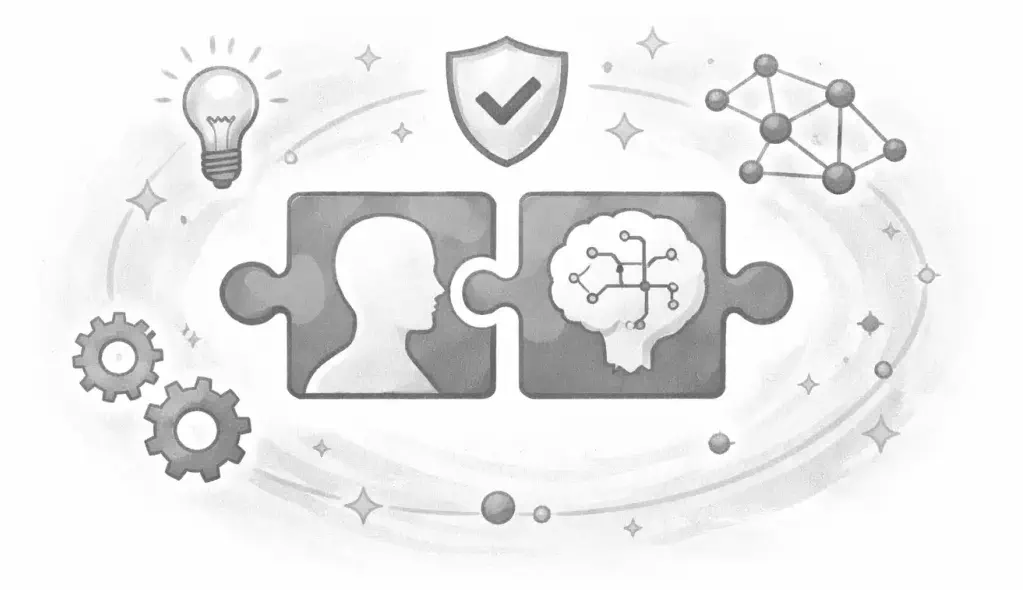
Artificial intelligence is like every major technological revolution before it. It brings both opportunity and disruption. It creates value — and it forces change. It opens doors — and it closes others.
The printing press changed knowledge.
Industrialization changed labor.
The internet changed communication.
AI is changing cognition and production itself.
The question is not whether AI has risks. It does.
The question is how we choose to use it.
🧭 Our Decision at ThK-Systems
At ThK-Systems, we have consciously decided to use AI in our work — not as a replacement for people, but as an amplifier of human capability.
We use tools such as ChatGPT as collaborators in our workflow. Over time, we have come to view them as a kind of partner.
But let’s be precise:
- This is not a partnership between equals.
- AI does not possess consciousness.
- It does not have lived experience.
- It does not carry responsibility.
- It does not reflect morally or stand accountable.
It simulates reasoning. It generates language. It predicts patterns.
Some people prefer to describe GPT systems strictly as tools — like a compiler, a database, or a text editor. That is understandable. And yet, in daily practice, the interaction can feel more dynamic than a traditional tool.
Perhaps the truth lies somewhere in between:
AI is neither merely a passive instrument nor a true colleague. It is something new — a different kind of collaborative system.
🛠️ What AI Actually Does for Us
We benefit from AI in very concrete, practical ways:
- Drafting and refining technical documentation
- Challenging architectural ideas and exploring alternatives
- Generating structured code prototypes
- Reviewing configurations and identifying blind spots
- Summarizing complex discussions
- Supporting research and structured comparison
- Improving clarity in written communication
- Helping us think faster without sacrificing precision
AI accelerates iteration.
It reduces friction in exploration.
It helps transform rough ideas into structured artifacts more quickly.
What it does not do is replace responsibility, experience, or judgment.
Architecture decisions remain human decisions.
Security responsibility remains human responsibility.
Long-term system thinking remains a human discipline.
AI assists. Humans decide.
🔍 A Deliberate Choice
We will continue to use AI — not because we are forced to, and not because it is fashionable, but because we have made a deliberate, reflective decision.
We believe that powerful technologies should be approached consciously — not blindly embraced and not fearfully rejected.
Used carelessly, AI can amplify confusion and misinformation.
Used responsibly, it can amplify clarity and productivity.
For us, it is a tool of augmentation — not automation of human worth.
The future will not belong to AI alone.
It will belong to those who learn how to work with it wisely.
And that is the path we have chosen.